About the Science
The Transformation Deck
Why a Deck?
Tarot began as a 15th-century Italian trick-taking card game, not a fortune-telling tool. It was designed to win rounds by playing higher cards, with 22 'trump' cards (the Major Arcana) used to beat lower-value suits. It took three hundred years before anyone proposed that the imagery carried deeper symbolic meaning, and another two centuries before practitioners began using the major arcana as a tool for psychological self-examination. But the structure was there from the beginning: twenty-two cards in a fixed sequence, each depicting a stage in a universal human arc from innocence through crisis through integration.
The major arcana isn't twenty-two random archetypes, but rather a journey. The Fool walks through every card in sequence, from innocence through destruction through integration. That sequential structure maps very closely to what Carl Jung called the individuation process: the painful, necessary work of becoming who you actually are rather than who you've been pretending to be. This is probably not a coincidence, because both tarot and Jung were drawing from the same source: the Western alchemical tradition, which mapped the stages of transformation centuries before either existed.
The problem is that traditional tarot encodes its transformational structure in the symbolic language of medieval European esotericism, a language that most people today have lost the key to read. Pentagrams and High Priestesses and Towers struck by lightning may have been precisely chosen to communicate stages of inner transformation, but for a modern audience they can feel quite opaque. The psychological architecture that later interpreters like Jung recognized within the major arcana can be obscured by the ancient imagery.
The Transformation Deck strips away the historical cipher and replaces it with three languages that we hope are more accessible: materials science, depth psychology, and (perhaps surprisingly) alchemy itself, reframed not as mysticism but as the original language of transformation that bridges the other two.
The Science of How Things Change
Materials science is concerned largely with how substances respond to stress. When a crystalline material (a rock, a metal, a mineral) is subjected to forces beyond its elastic limit, it doesn't necessarily fail by cracking but instead can reorganize. The internal architecture reshuffles: defects accumulate, boundaries move, and new grains can form and grow while the old microstructure is progressively erased. Importantly, the new microstructure often becomes less brittle, more able to respond to future stress without fracturing. The material doesn't just survive the transformation; it comes out better adapted.
The stages of this process are well-documented, reproducible under known conditions, and universal across many crystalline materials:
Metastability
A system in apparent equilibrium, but not at its lowest energy state
A shallow valley in an energy landscape. Stable enough to persist for a long time, even though a deeper, more stable configuration exists elsewhere. The system stays put because a ridge separates it from the better state.
Dislocation Accumulation
Under stress, defects multiply in the crystal lattice
Each defect stores energy. The material becomes harder but more brittle, stronger on the surface but more fragile underneath. The stored energy accumulates gradually, often with little outward sign of change.
Yield and Nucleation
Beyond a critical threshold, the old structure gives way
At the sites of greatest disorder, something new begins to crystallize: tiny regions of strain-free lattice that grow by consuming the chaos around them. Onset can feel sudden even though the driving force accumulated over a long period.
Recrystallization and Grain Growth
The new structure gradually replaces the old
The material develops new properties, new orientations, new ways of responding to stress. It flows where it once fractured.

The transformation landscape. A system rests in a shallow basin of metastability while a deeper, more stable configuration waits beyond the ridge.
What we're claiming (and what we're not)
The microstructural sequence in crystalline materials under stress is established science, documented across decades of laboratory and field research. The suggestion that the same structural logic shows up in psychological transformation is a hypothesis, not a proven equivalence. What connects them is a shared dynamical vocabulary: when any system has multiple stable configurations and is driven far from equilibrium, there are only so many ways the loss of stability and reorganization can unfold. We are not claiming that a psyche is literally a crystal. We are proposing that the architecture of transformation, the way a system gets stuck, absorbs stress, breaks coherence, and then reorganizes, can be described with a shared map.
Three Layers, One Process
The Transformation Deck is built on a framework we call Transformation Dynamics: the premise that transformation follows the same structural logic regardless of the system experiencing it. Each of the 24 cards carries three simultaneous descriptions of the same stage of this process.
Materials Science
When crystalline materials are subjected to forces that exceed their capacity to absorb the energy elastically, they respond through a sequence that is remarkably consistent: steady state, stress, accumulation of damage, a critical threshold, then reorganization from within. The old structure is not repaired. It is replaced by something new that grew out of the disorder. And the material carries the memory of that transformation in its internal architecture, which changes how it will respond to future stress.
Alchemy
Alchemy is widely misunderstood as a failed attempt to turn physical lead into gold. It was, in fact, a sophisticated symbolic system for describing transformation, and probably the oldest systematic framework humans developed for mapping how complex systems move from one state to another.
The alchemists organized transformation into four stages, each named for the color changes they observed in their vessels. Nigredo, the blackening—destruction of the original form. Albedo, the whitening—purification, the separation of what is essential from what is not. Citrinitas, the yellowing—the emergence of something genuinely new, the dawn of a reorganized substance. And Rubedo, the reddening—full integration, the completed work, the "philosopher's stone."
Carl Jung spent decades demonstrating that the alchemists were not just describing chemical reactions. They were projecting their own psychological transformation process onto their materials. The four stages of the Great Work map closely onto the stages of what Jung called individuation, the process of becoming psychologically whole.
Psychology
Individuation is Jung's term for the central task of human psychological development: the integration of the conscious and unconscious aspects of the personality into a functional whole. It is the often painful process of discovering that the identity you have been performing (what Jung called the persona) is not the totality of who you are, and that the parts of yourself you have rejected or hidden (what he called the shadow) contain energy and information essential to your wholeness.
The process follows a recognizable arc, typically beginning with a crisis that the existing identity cannot accommodate: job loss, illness, or the failure of a life structure that seemed permanent. The persona cracks and what was hidden becomes visible. This is disorienting and often terrifying, but it is also the beginning of genuine self-knowledge. Through honest encounter with the shadow material, a new and more complete identity gradually emerges. Not a repaired version of the old one, but something genuinely new, grown from within the dissolution.
Jung was explicit that this process is not optional for those who wish to live consciously. It is also not something you do once and complete. It is cyclical: each new life crisis invites a deeper iteration of the same fundamental arc.
The Four Phases
The deck follows the alchemical color sequence, which also describes the arc of microstructural evolution under stress:
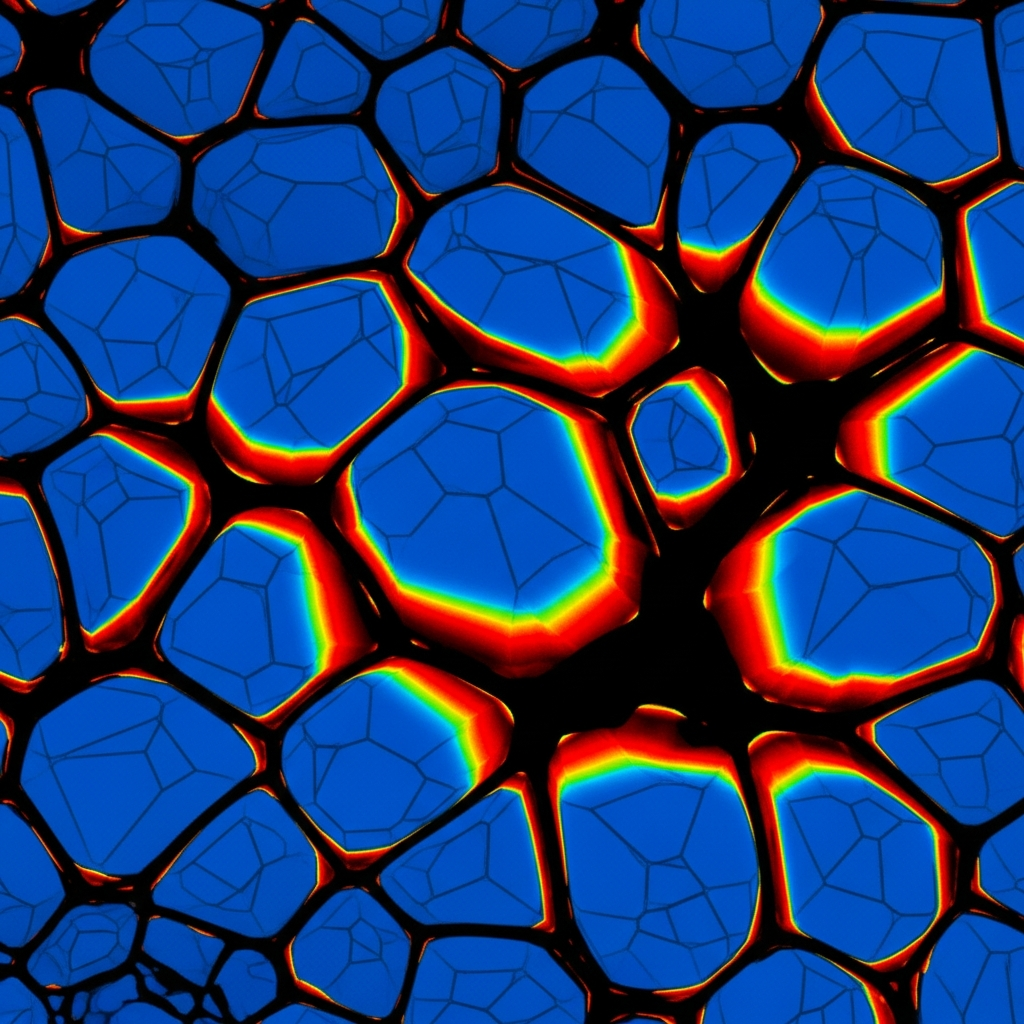
Nigredo
The Blackening · Cards 1–6
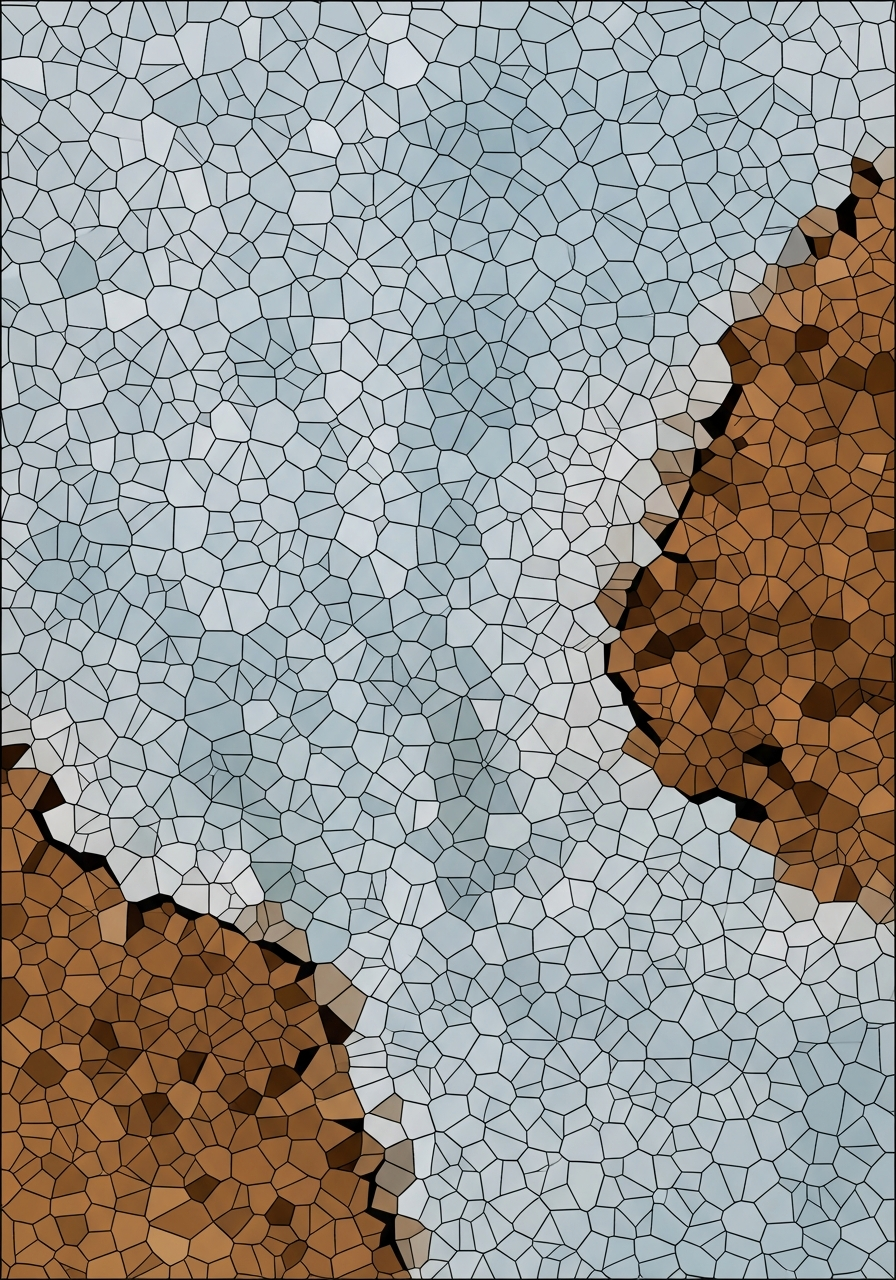
Albedo
The Whitening · Cards 7–12
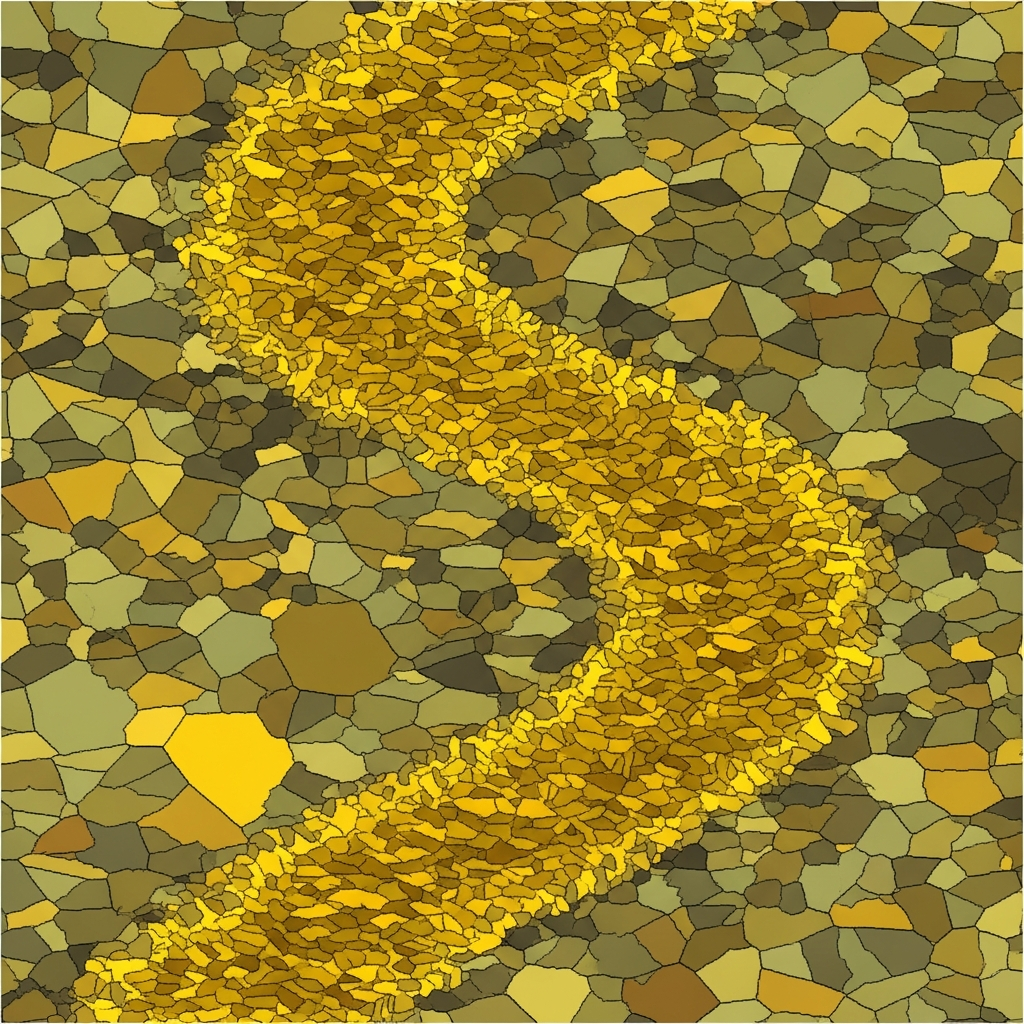
Citrinitas
The Yellowing · Cards 13–18
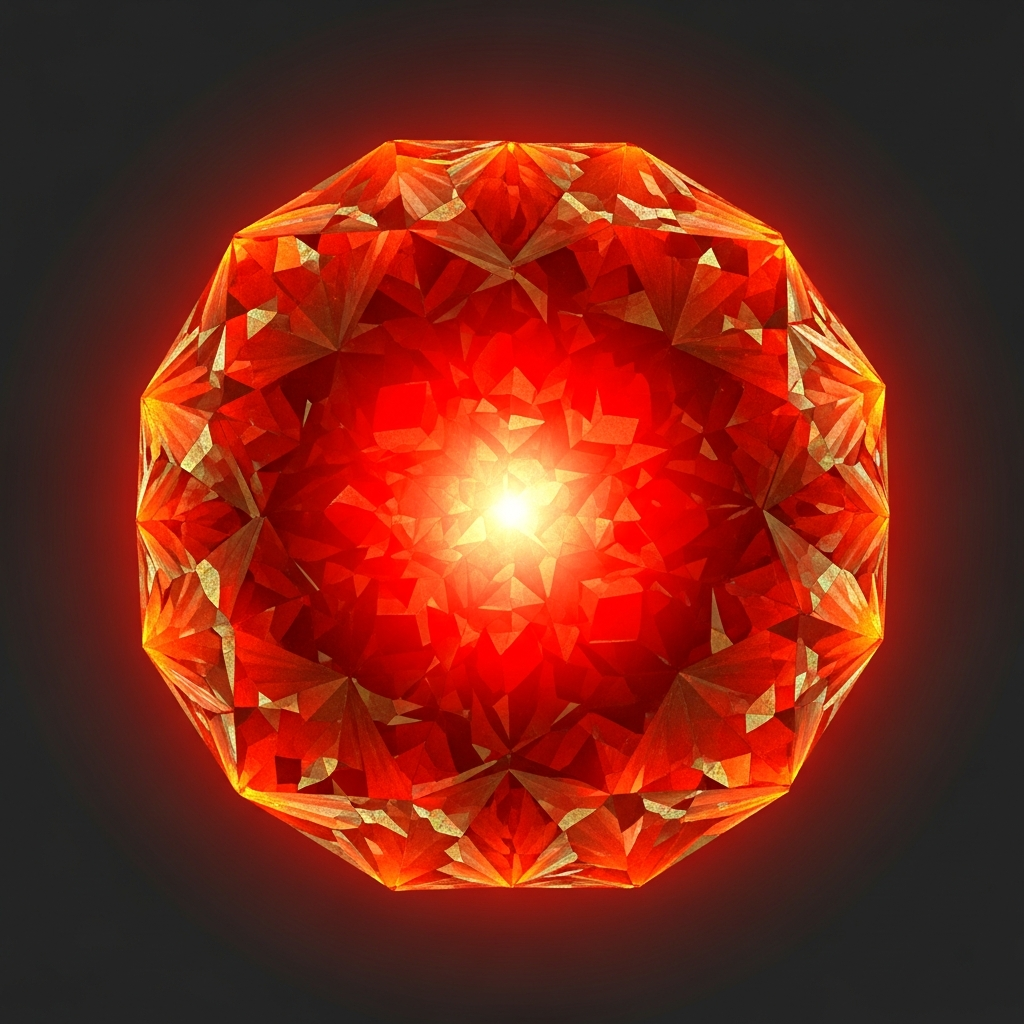
Rubedo
The Reddening · Cards 19–24
Why Now
We are living through what is likely to be the most disruptive transformation in human history. Artificial intelligence is not just changing what we do; it is challenging who we are. When the thing that made you valuable (your knowledge, your expertise, your cognitive labor) can be replicated by a machine, the crisis is not only economic but existential.
Most responses to this crisis focus on adaptation: learn new skills, find new markets, stay ahead of the curve. These are surface strategies for a deep problem. The real challenge is not what to do next but who to be when the identity you built over decades no longer holds.
The physics of transformation suggests something practical here: the suffering of transition is amplified by low damping, the system's capacity for regulation and containment under load. Anything that increases effective damping (grounding practices, community, rhythm, contemplative practice) can reduce the amplitude of the oscillation without changing the destination. This is not avoidance. It is the difference between a system that reorganizes and one that shatters.
That is the work this deck is designed for. Not productivity, optimization, or wellness, but the hard, specific, stage-by-stage work of letting an old identity dissolve and allowing a new one to crystallize from within.
The physics shows how systems reorganize under stress.
The alchemy mapped the stages centuries ago.
The psychology says you're already in the process.
The foundation of this deck lies in a simple recognition: the enduring power of the tarot has nothing to do with fortune telling. Its sequential structure mirrors a universal transformation arc (stress, breakdown, reorganization, integration) that the alchemical tradition mapped centuries ago and that Jung recognized as the path of individuation. The same arc is observable in crystalline materials when subjected to the forces that reshape them. Same structural logic, different vocabulary. The Transformation Deck is built on the premise that transformation follows the same path whether it occurs in a crystal lattice or a human psyche.
A product of Inner Exploration Labs
A product of Inner Exploration Labs · © 2026